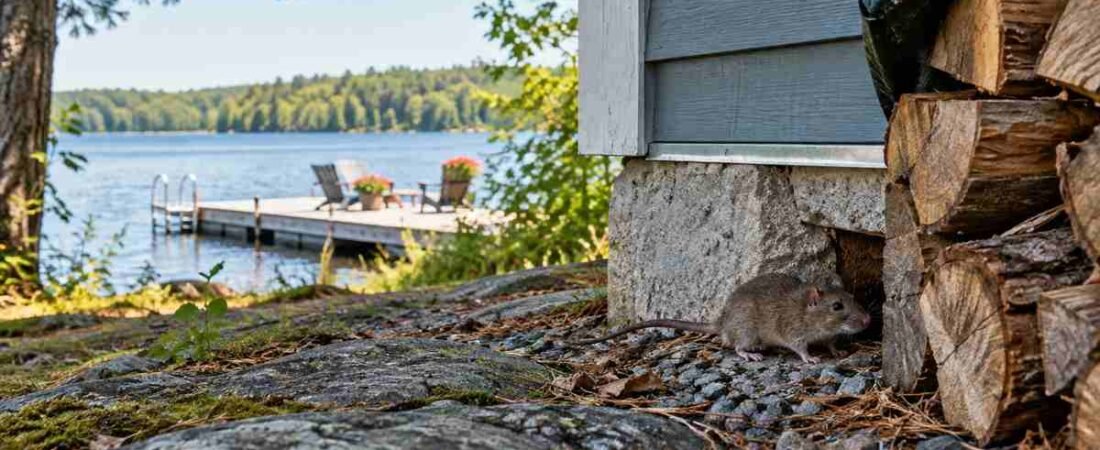
A cottage is different from a home where someone checks the cupboards every morning. When a property sits empty for weeks, a small opening can go unnoticed while mice explore the kitchen, soft furnishings and storage areas. The problem may not become obvious until the next visit, when the smell, droppings or gnawed supplies have already spread.
A sensible closing routine protects more than food. It reduces shelter, identifies building defects and makes it easier to detect activity the next time you arrive.
Inspect Entry Points Before Packing the Car
Begin outside in daylight. Check the line where siding meets the foundation, the underside of exterior steps, door thresholds and the openings around water and electrical services. At older lakeside properties, uneven stonework, timber skirting and seasonal ground movement may leave irregular gaps. Do not overlook the crawlspace hatch or any opening created when pipes were replaced.
Look for worn weatherstripping, gnaw marks or droppings close to a suspected route. Make a short list of repairs and photograph each location. Large repairs around wiring, drainage or structural components should be handled by a qualified contractor, not covered with improvised foam that animals can easily damage.
Clear stored lumber and loose debris away from exterior walls. These materials can conceal openings and make routine inspection difficult. Move firewood to an appropriate outdoor location rather than stacking it immediately against the cabin.
Make an Empty Cottage Less Rewarding to Rodents
Remove perishable food and transfer anything that stays into sturdy sealed containers. Flour, crackers, pet treats and bird seed in paper or cardboard are easy targets. Empty the kitchen bin, sweep beneath freestanding appliances and wipe food residue from the counters. Small spills in a drawer can attract pests during a long absence even if the rest of the cottage appears spotless.
If you have already found gnaw marks, a pest control technician serving Barrie can inspect activity before the building is left vacant. Ask how an extermination service would handle an unoccupied property, including trap checks, access arrangements and follow-up inspections. Do not leave control measures that require regular checking unattended for weeks. The pest control technician should also explain how the property will be monitored when nobody is staying there.
Keep spare bedding in appropriate sealed storage where practical, but avoid packing damp textiles into airtight bags. Solve moisture issues first so stored materials do not develop another problem while you are away.
Deal With Crawlspaces, Water and Storage Areas
Mice may enter through a crawlspace and travel along plumbing into a kitchen cabinet. A dry, secure living room does not prove the lower structure is protected. Inspect the underside of utility penetrations, damaged vents and places where insulation has been disturbed. If you cannot safely access the crawlspace, do not squeeze into it without an appropriate inspection plan.
Health Canada’s rat and mouse guide stresses that rodent control requires physical exclusion and sanitation alongside any trapping or baiting. That is especially relevant when there is nobody onsite to spot a new entry immediately.
Store paper towels, spare linens and other nesting materials in cupboards that can be checked easily. Elevate boxes where feasible so the floor and corners remain visible. Before leaving, photograph storage arrangements; at reopening, you can tell whether an item has been displaced rather than relying on memory.
Reopen Carefully if You Find Signs of Activity
When you return, look through the building before moving bags or making food. Inspect cabinets, pantry shelves and the area around the hot-water tank. If you find droppings, do not immediately sweep or vacuum them. Dry disturbance can spread contaminated dust. Keep children and pets out of affected areas and follow public-health cleaning precautions.
Identify whether the evidence is isolated or widespread. A few old droppings beneath a seldom-used cupboard need a different assessment from fresh gnawing in several rooms and movement inside a wall. Check the exterior repair list from your previous visit and note any openings that have changed after freeze-thaw weather.
If contaminated insulation, stored fabrics or inaccessible cavities are involved, professional remediation may be needed. Avoid assuming the cottage is safe because you have not seen a live mouse during a short weekend visit.
Set Up a Maintenance Routine That Fits Your Visits
Choose realistic checks for spring opening, midsummer use and fall closing. Review weatherstripping after heavy use, inspect lower walls after major storms and remove food sources before every extended absence. If a neighbour or property manager makes periodic visits, ask them to report fresh gnaw marks or droppings rather than moving items and hiding the evidence.
A professional extermination service should provide a clear plan for unresolved access points, active trapping and any return inspection. You should know who is responsible for checking equipment when the cottage is empty. Schedule repair work separately where building trades are required.
Use Health Canada’s pesticide safety information before purchasing products to leave at a seasonal property. The goal is a cottage that remains easier to inspect, repair and enjoy—not a building filled with unattended bait or chemicals between visits.